
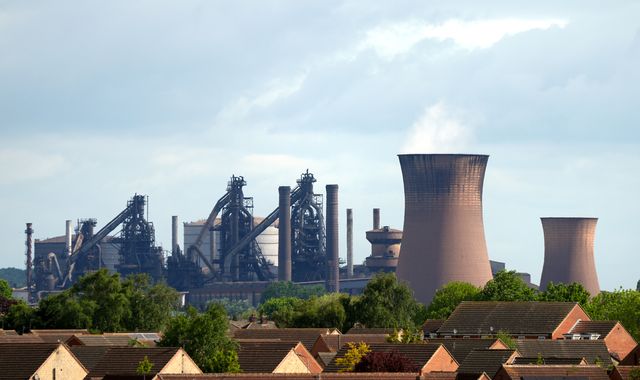
British Steel has been taken into public ownership in the "national interest", the government has announced.
The Department for Business and Trade (DBT) said a new leadership team had been appointed to focus on "stabilising the business and developing a commercially sustainable, low-carbon future".
It argued that the decision - enabled by new legislation - protected not only thousands of jobs at British Steel and in the supply chain but also the sector's "vital" role in the economy.
Money latest: Stamp duty divides north and south of England
Britain's second-biggest steel producer was taken into government control in April last year after it emerged that Jingye Group, its Chinese owner since 2020, had drawn up plans to close its two blast furnaces at Scunthorpe.
The government said that despite extensive discussions, it had not been possible to reach an agreement with the now-former owner that would secure the future of the company while delivering value for taxpayers.
The business secretary Peter Kyle told Sky's Mornings with Ridge and Frost programme from Scunthorpe that an "independent process" would establish whether compensation was due to the company.
On the question of whether jobs would have to be lost, he added: "When it comes to the staffing here going into the future, everybody accepts there needs to be a modernisation programme.
"I'm in the process of appointing a board... they will make all the decisions about having a sustainable future."
Jingye was yet to comment.
Figures recently released to MPs showed that the intervention at British Steel had so far cost the public purse £555m.
Mr Kyle said of the justification: "British Steel is one of the nation's biggest steel producers, and I've made the decision to nationalise the business to secure steelmaking capability and maintain production in the national interest.
"British Steel now belongs to the British people, and our focus is on the future: stabilising the business, backing the communities that rely on it and building a sustainable, competitive and decarbonised steel sector for the years ahead."
The Scunthorpe site produces so-called virgin steel, a product made from raw materials such as iron ore and coking coal - as opposed to recycled materials.
It is the last such plant to make steel from scratch in the country.
Scunthorpe is the main provider of steel rails to Network Rail and also provides products to the UK's construction and automotive industries.
But high energy costs in the UK means it has struggled to compete, losing up to £700,000 a day according to some estimates.
Jingye, which had been seeking compensation from the government of up to £1bn, had described the blast furnaces as "no longer financially sustainable".
It also cited headwinds from trade tariffs and costs associated with transitioning to lower-carbon production techniques.
Read more:
Why did British Steel need to be saved?
The government's intervention preceded the publication of its steel strategy this spring which set an ambition for up to 50% of steel used in the UK to be made in the UK.
New trade measures also help limit the threat from cheap imports, mainly from China, as tariff-free volumes face reduced quotas.
British Steel's interim chief executive, Allan Bell, said: "This is a momentous day for British Steel, and everyone connected with our business - our dedicated employees, our valued customers and suppliers, and the tens of thousands of people in our supply chains and local communities.
"Much more than that, it is an historic day for Britain and UK manufacturing - one which safeguards our future and strengthens national security and infrastructure."

(c) Sky News 2026: British Steel taken into public ownership
 TikTok being investigated by Ofcom over child safety measures
 Parents face £1,100 bill for summer holiday childcare
 Eight men accused of being part of grooming gang charged over rape and child sexual abuse
 Fraudster who stole £300k from pensioner and spent it on Botox and lavish meals arrested in Tenerife